
Loading...
Ecommerce omni channel strategy helps DTC brands connect every channel into one seamless customer experience. Learn how leading brands build and scale it.
Ecommerce omnichannel means creating a unified, connected customer experience across website, mobile apps, social media platforms, marketplaces, and any brick-and-mortar store presence, not just selling through multiple channels independently.
Omnichannel customers spend 30% more than single-channel buyers and show 30% higher customer lifetime value, making them the most valuable customer segment for any DTC brand.
DTC brands above roughly $5M in annual revenue are increasingly adding retail partnerships, Amazon, social commerce, and physical touchpoints to their commerce strategy.
Creator content is the most versatile omnichannel content asset available to DTC brands. One activation produces content for owned, earned, paid, and physical channels simultaneously.
AMT helps DTC brands build a scalable creator content engine for every channel, keeping content consistent without proportionally growing the team.
Omnichannel ecommerce is the practice of creating a unified customer experience across every channel a brand operates: the brand website, mobile device experiences, social media, email and SMS, physical retail locations, and third-party marketplaces like Amazon. Omnichannel ecommerce integrates all channels for a unified experience, rather than treating each as a standalone silo.
The key distinction is integration. In a multichannel strategy, each channel operates independently. In an omnichannel approach, customer data, store inventory, messaging, and the entire customer journey are synchronized. Omnichannel links sales channels with shared data and inventory so the brand recognizes the same person at every step.
A concrete example: a customer discovers a product through a creator post on TikTok, visits the brand website on their mobile device, adds the item to cart, and leaves. Two hours later, they receive an SMS reminder. They check the product on Amazon for reviews, then walk into a Target store and purchase it in person. Throughout that seamless customer journey, they are recognized as the same customer. That is omnichannel commerce in action.
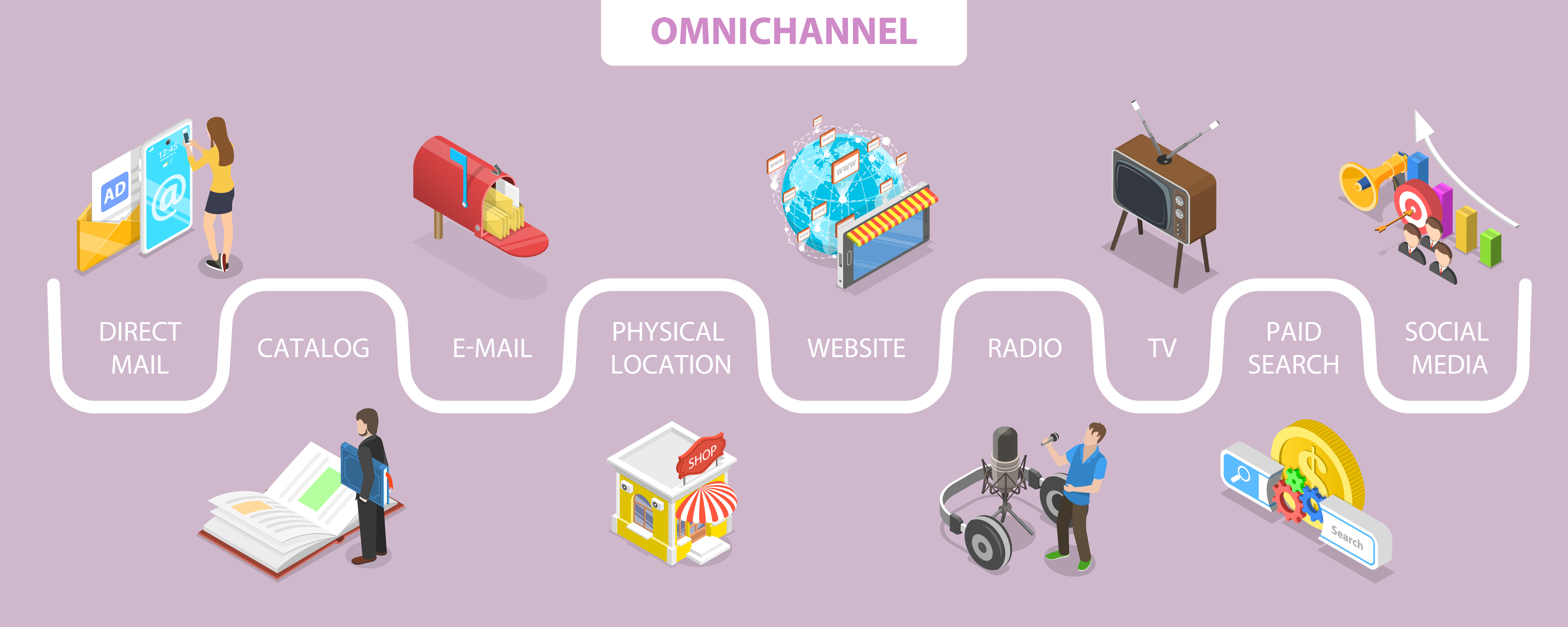
Typical customer touchpoints include the brand site, mobile apps, online stores, social media platforms, email, SMS, Amazon, and any brick-and-mortar store or pop-up locations. When all these channels share context, the result is a seamless experience that builds customer loyalty. AMT is the AI-native creator marketing platform that helps e-commerce brands fuel every channel of their omnichannel strategy, from discovery through content collection, usage rights management, and performance tracking, all in one unified dashboard.
.jpg)
The difference between omnichannel and multichannel ecommerce comes down to one word: integration.
Multichannel ecommerce operates independently across different platforms. A brand that sends email campaigns, runs Meta ads, and has a TikTok presence is multichannel. The data from each channel lives in its own silo. Marketing strategies do not share learnings across platforms. Pricing, promotions, and customer interactions may differ from one channel to the next, and studies consistently show that the majority of brands still struggle to deliver a truly unified cross-channel experience.
Omnichannel ecommerce strategy connects those same channels around the customer. A brand that uses purchase data from its website to personalize Meta retargeting, triggers an SMS after an abandoned cart initiated through a TikTok Shop link, and surfaces that same customer's order history when they visit a physical store is operating with a true omnichannel approach. This kind of integration requires a customer data platform, coordinated customer journeys, and unified systems for customer relationship management.
For most DTC brands at seed to growth stage, a multichannel strategy is the appropriate framework. True omnichannel integration becomes worthwhile at scale, typically when annual revenue exceeds $5M and the complexity of customer journeys demands it. Data unification remains one of the most persistent operational challenges brands face as they make this transition.
The pure DTC-only model has hit structural limits for brands above $5M. Paid social CAC has risen substantially since 2021, and online-only brands face higher acquisition costs than brands with physical touchpoints that build familiarity in the real world. Relying on a single performance channel is a business strategy with increasing risk.
Consumer behavior has shifted. 73% of online shoppers use multiple channels during purchases, and 55.8% of shoppers prefer online shopping to visiting a physical store, but many still complete purchases offline or through a third-party platform they already trust. Customers expect brands to meet them wherever they are, and the majority of consumers feel frustrated by irrelevant content and offers that do not reflect their previous interactions.
The response from successful DTC brands is omnichannel expansion: adding retail partnerships, launching Amazon storefronts, investing in social commerce, and in some cases opening owned retail locations. The data supports this ecommerce strategy clearly:
Omnichannel shoppers spend 30% more than single-channel buyers
Omnichannel customers have a 30% higher lifetime value
Omnichannel shoppers make purchases 70% more often than others
Omnichannel customers are 3x more loyal than digital-only customers
Retailers with mature omnichannel capabilities achieve nearly 2x higher growth rates
Omnichannel marketing can reduce cart abandonment by 18%
Brands using multiple sales channels see roughly 9.5% annual revenue growth compared to 3.4% for single-channel brands. Omnichannel is not a theoretical improvement. It is a measurable sales strategy advantage.
Most ecommerce omnichannel roadmaps prioritize the channels customers already use. For DTC brands evolving into an omnichannel DTC model, four channels consistently appear: retail partnerships, Amazon, social commerce, and owned physical retail. Each channel affects customer experience, customer engagement, and the way brands handle gathering customer data and attribution differently.
DTC brands increasingly partner with major retailers like Target, Sephora, Whole Foods, and Ulta as part of an omni channel retail strategy. Retail shelf placement introduces the brand to retail customers who may never encounter it through digital channels alone, and physical presence signals legitimacy that online stores alone cannot replicate.
The trade-offs are real: shared margins, limited direct customer data, and the need to protect a consistent brand identity across retailer environments. Integrated inventory systems lead to more accurate demand forecasting, and integrated systems in omnichannel approaches provide real-time inventory updates, but coordinating stock across retailers requires operational discipline. Flexible fulfillment options like BOPIS also enhance the omnichannel shopping experience for retail customers who want convenience.
Tactics to pull retail shoppers into owned channels include QR codes on packaging, loyalty programs where in store buyers can register purchases, and creator content that educates beyond the shelf. The goal is to convert one-time retail buyers into long-term omnichannel customers through email, SMS, and personalized experiences that improve customer satisfaction over time.
Many product searches in the US now start on Amazon. For most consumer categories, an Amazon presence is a customer expectation, not a channel choice. Real-time inventory visibility is a key component of an omnichannel strategy, and Amazon demands it.
The tension is genuine: Amazon captures margin and customer data. The resolution is treating Amazon as a discovery and convenience channel while keeping premium bundles, subscription offers, or early launches on the brand site for first-party data collection. In one case study, Serta found that 62% of ad-attributed sales from Amazon display campaigns happened outside Amazon itself, across retailers like Macy's and Walmart, proving that catalog sales on one platform can lift performance everywhere.
Coordinated inventory, pricing, and messaging across Amazon and the brand site are essential to avoid channel conflict and maintain a consistent experience for online channels and offline channels alike.
DTC social commerce means selling directly through platforms like TikTok Shop, Instagram Shopping, and Pinterest Shopping. These channels compress the customer journey from creator content to checkout into a few taps, removing friction and improving customer engagement. TikTok Shop alone grew to roughly $15.8B in the US in 2025.
Social commerce data, such as products viewed, creators followed, and wishlists created, can inform broader omnichannel customer journeys on email, SMS, and the brand site. Centralizing customer data allows for personalized recommendations in omnichannel marketing, and 78% of consumers respond positively to personalized offers built from this kind of behavioral signal.
Brands should treat social commerce both as a revenue channel and a discovery engine, feeding first-party customer data and remarketing lists back into their omnichannel e commerce strategy.
Some digitally native DTC brands open pop-ups or permanent stores once they reach significant scale, often beyond $10M in annual revenue. Warby Parker, for example, expanded from online-only to over 145 stores with shared inventory between online and offline. Allbirds followed a similar path.
The benefits are measurable: lower blended CAC in mature markets, deeper customer experience through face-to-face customer interactions, and stronger customer loyalty. Physical retail works best for brands with a strong brand identity and high repeat purchase rates.
Operationally, POS data must integrate with online customer data to support a unified omnichannel customer journey. Physical retail must reflect the same consistent brand identity, messaging, and pricing customers see on digital channels. When customers interact with a brand across both online and offline channels, they should feel continuity, not disconnection.
The practical challenge of omnichannel ecommerce for lean DTC teams is content volume. Each channel requires content in the right format, at the right cadence, with the right messaging. Creating channel-specific assets for owned social, paid social, email, retail marketing materials, Amazon listing imagery, and in store displays independently is not feasible without a large team.
Creator content solves this problem. One creator activation, properly executed with usage rights secured, produces:
Organic social content (the creator's post)
Paid social creative (licensed for Meta and TikTok ads)
Email assets (creator imagery and quotes)
Product page social proof (embedded UGC)
Retail marketing materials (lifestyle imagery for shelf displays)
Shoppers who interact with creator and UGC content convert at significantly higher rates. Removing friction in the customer journey boosts sales in an omnichannel environment, and consistent creator narratives across channels help build trust and enhance brand loyalty.
AMT builds the creator content pipeline that makes omnichannel content production possible at scale. Its AI-native platform handles creator discovery, automated outreach, content collection, usage rights management, payments, and performance tracking in a single dashboard. DTC brands can run high-volume creator campaigns across multiple platforms without adding proportional headcount, feeding a steady stream of assets into every channel of their omnichannel growth strategy.
.jpg)
Do not try to be omnichannel from day one. Start with core digital foundations: a high-converting site, email and SMS lifecycle flows, and a reliable creator marketing engine. Build the content pipeline before expanding to retail or Amazon.
Add channels sequentially based on where your customers already are. If analytics show significant traffic from Amazon product searches, that signals an Amazon storefront is worthwhile. If retail brands in your category generate strong awareness, a partnership conversation makes sense. Build your omnichannel e commerce strategy around tracking customer behavior data, not a theoretical ideal channel mix.
Map customer journeys across new and existing customer touchpoints. Ensure consistent messaging, offers, and brand identity at each step. 67.2% of customers share personal data for personalized experiences, so use that data responsibly to create personalized experiences that improve customer loyalty and drive repeat purchases across different channels and all these channels together.
Omnichannel ecommerce success should be evaluated with metrics that capture customer lifetime, not just last-click ROAS. Companies with omnichannel strategies report 27% lower fulfillment costs, but the real value shows up in customer retention and lifetime spend.
Key metrics to track:
| Metric | Why it matters |
|---|---|
| Customer lifetime value | Omnichannel customers deliver 30% higher LTV |
| Customer retention rate | Brands with strong omnichannel engagement retain roughly 89% of customers |
| Omnichannel customer share | Percentage of total customers who purchase across multiple channels |
| Cross-channel attribution | Identifies which journeys create highest-margin, highest-loyalty cohorts |
| Content performance by asset | Reveals which creator content works best on which marketing channels |
Over 33% of marketers lack real-time analytics for omnichannel strategies, which makes measurement one of the biggest operational gaps. Integrated inventory systems reduce cart abandonment by 18%, and tracking these improvements across all the channels a brand operates reveals the true impact of an omnichannel commerce strategy.
AMT's analytics centralize creator-driven performance data in a unified dashboard, making it easier to see which assets drive customer engagement on which channels and feed those insights back into future marketing automation and omnichannel commerce solutions.
Omnichannel ecommerce is not a strategy for every stage of DTC growth. It is a natural evolution that the most successful brands make as they scale. The brands that make this transition well are the ones that build a strong content engine first, using creator content, email, and owned social as their foundation, and then use that foundation to fuel a seamless shopping experience across every new channel they add.
Customer expectations will only increase. Omnichannel shopping is becoming the default, not the exception. The DTC brands that invest in a unified customer experience across online and offline channels now will be the ones that improve customer satisfaction, build lasting brand loyalty, and capture the customer lifetime value that single-channel competitors leave behind.
If you are ready to build the creator content pipeline that powers an omnichannel ecommerce strategy, explore what AMT offers through its pricing, features, and case studies.
Common questions about this topic.
Jul 23, 2026


.jpg)